
Import of pet animals
Event description
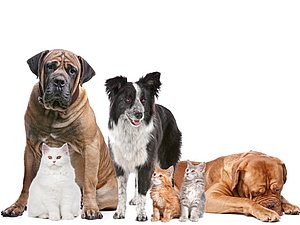
Live animals from third countries can enter the EU only at certain points of entry where they are subject to veterinary checks in order to ensure their traceability and protection against transmission of diseases to people and animals. In Slovenia, such a point of entry for live animals from third countries is Airport Brnik (Border Control Post), where competent officers of the Administration of the Republic of Slovenia for Food Safety, Veterinary and Plant Protection can carry out the necessary checks. Animals which do not pass these checks satisfactorily are not allowed to enter the customs territory of the Union.
Pet animals
Pursuant to Regulation (EU) 2016/429 and Commission Delegated Regulation (EU) 2026/131 laying down uniform rules at the EU level regarding non-commercial movement of pet animals, the following animals are considered as pet animals: dogs, cats, ferrets, invertebrates (with the exception of bees, molluscs belonging to the phylum Mollusca and crustaceans belonging to the subphylum Crustacea), ornamental aquatic animals, amphibians, reptiles, birds: specimens of avian species other than fowl, turkeys, guinea fowl, ducks, geese, quails, pigeons, pheasants, partridges and ratites (Rattitae) and mammals: rodents and rabbits other than those intended for food production, kept for private non-commercial purposes. For dogs, cats, ferrets and pet birds, for the purposes of non-commercial movements of pet animals from third countries to the territory of the EU, Member States have designated points of entry (points of entry), through which these animals are permitted to enter their territory.
Non-commercial movements
A non-commercial movement is any movement of a pet animal accompanying its owner and which does not have as its aim either the sale of or another form of transfer of ownership of the animal concerned and is part of the movement of the owner either under his direct responsibility or under the responsibility of an authorised person, in cases where the pet animal is physically separated from its owner. If the movement is carried out by an authorised person, the identification documents must also be accompanied by a written authorisation, and such a movement may only take place within five days from the movement of the pet owner. Animal health requirements laid down by veterinary regulations regarding non-commercial movements of pet animals differ according to the species of animals, their age, country of origin or destination etc. Manners of identification of pet animals, accompanying documents and health requirements (vaccination) are also set out. For dogs, cats, ferrets and pet birds, as a rule, a maximum of five animals per means of transport may enter the EU territory during a single non-commercial movement (unless the means of transport is public transport), and in special situations (participation at competitions, exhibitions, sporting events etc.) and if certain conditions are met, this number may exceed five.
The strictest veterinary requirements regarding the movement of pet animals from third countries apply to animals which are susceptible to rabies (dogs, cats and ferrets) and avian influenza (birds). The Administration of the Republic of Slovenia for Food Safety, Veterinary and Plant Protection and customs authorities perform checks within the sphere of their competence in order to establish whether requirements for non-commercial movements of pet animals are met. Owners of pet animals must present the accompanying documents to the customs authority at the point of entry and enable possible checks.

Did you know?
The introduction of certain animal species, their parts and products thereof can be limited also for other reasons such as risk of extinction, risk of invasive alien species etc.

More details
- Animals and animal products
Travelling with pets (the Administration of the Republic of Slovenia for food safety, veterinary and plant protection)


